Introduction
A common conversation when showing users Sales Orders in Business Central revolves around the importance of updating the Document Date and Posting Date prior to posting the Sales Invoice from the Sales Order. In the early stages when going live with Business Central, it’s also a common mistake not to change these dates, which often leads to reconciliation issues and can potentially require corrections.
In this post I’ll go through why its essential those dates are updated if there is a delay from the time of creating the Sales Order, to Shipping and Invoicing. I’ll also point out some settings that can help prevent posting errors with dates, and other methods for posting Sales Invoices if users keep forgetting to change them causing issues with incorrect entries being posted.
The role of Document Date and Posting Date on a Sales Order
The Document Date and Posting Date are two key dates on a Sales Order. Let’s first look at each of these individually.
Document Date
The Document Date on the Sales Order is used as the Document Date of the Invoice when you post the Sales Invoice. It also determines the Due Date, which is calculated based on the payment terms specified in the Sales Order.
Posting Date
This date is used for the ledger entries that are created when you ship and/or invoice the Sales Order. For example it will be used on the G/L Entries, Customer Ledger Entries and also the Item Ledger Entries and Value Entries.
Now we know how important these dates are, let’s take a look at the common issue users encounter when posting Sales Orders.
The Common Issue – Defaulting Dates
When you create a Sales Order its not only the “Order Date” that defaults to your Work Date but also the “Document Date” and “Posting Date” (you can can change the behaviour of how the Posting Date defaults but more on that later 😊)
This creates a problem if there’s a time delay from the point of raising the Sales Order to the point when you will ship and invoice the Sales Order. When a delay occurs you must manually change the Document Date and Posting Date when you come to ship and invoice the Sales Order, or the ledger entries that are created will have the wrong dates.
Let’s look at this more closely with an example.
Walkthrough Sales Order to Sales Invoice
Here we have a Sales Order that was created on the 15th of August. As you can see the Order Date, Document Date and Posting Date all reflect the 15th of August.
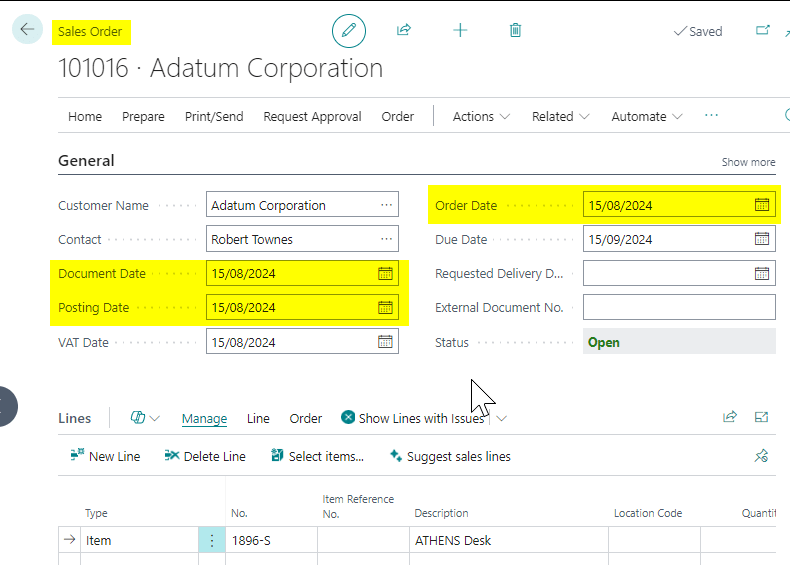
Let’s say we are waiting on more stock of this item, and therefore we aren’t ready to deliver this item on the day of the Sales Order. Then, a few weeks pass, the goods arrive at our location, and we are ready to ship and invoice the Sales Order.
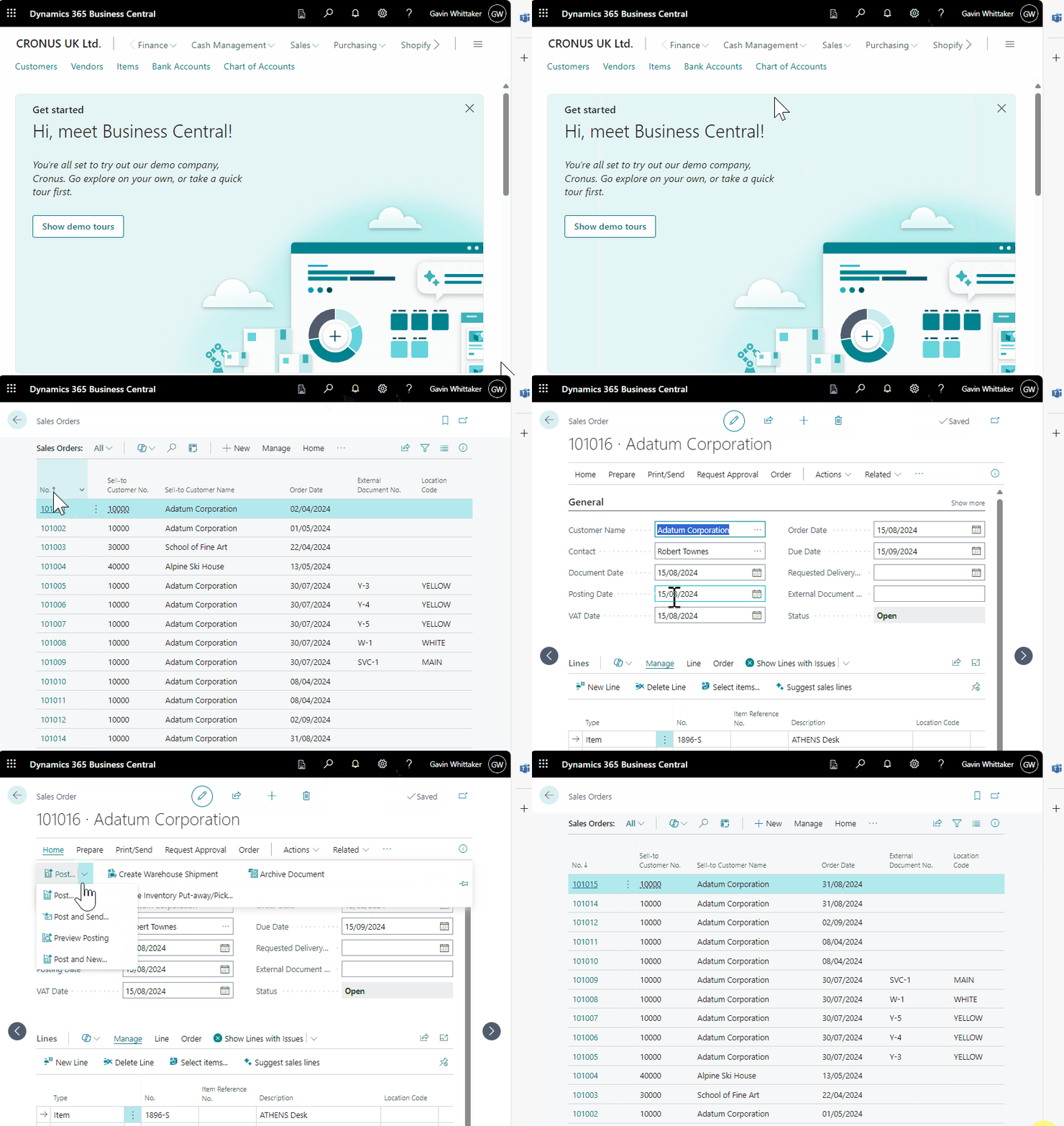
Although my Work Date in Business Central is now the 29th of August (two weeks after the Sales Order was created), the Document Date and Posting Date remain set to the 15th of August when I created the Sales Order. As a result, it’s easy to ship and invoice the Sales Order without remembering to update the dates, as shown in the demonstration below.
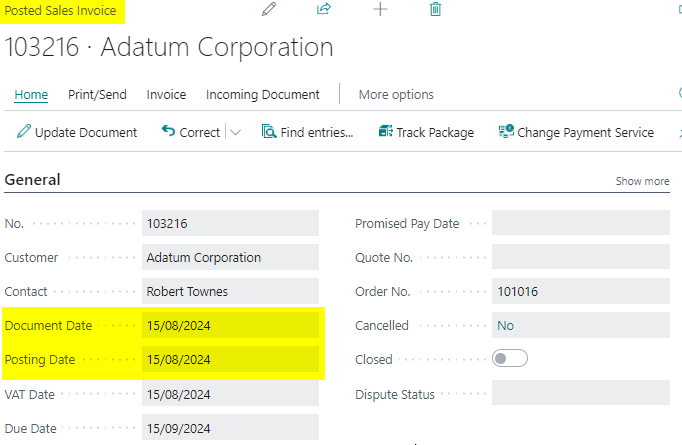
As you can see below the Posted Sales Invoice has the incorrect Document and Posting Date of the 15th of August
Therefore, if we were to look at the ledger entries we’d see they were incorrect, as they have posted with the date of 15th of August rather than the 29th of August.
Some Sales Setup options to help
There are built in features to help mitigate these errors. These are located in the “Sales and Receivables Setup” page and are highlighted below
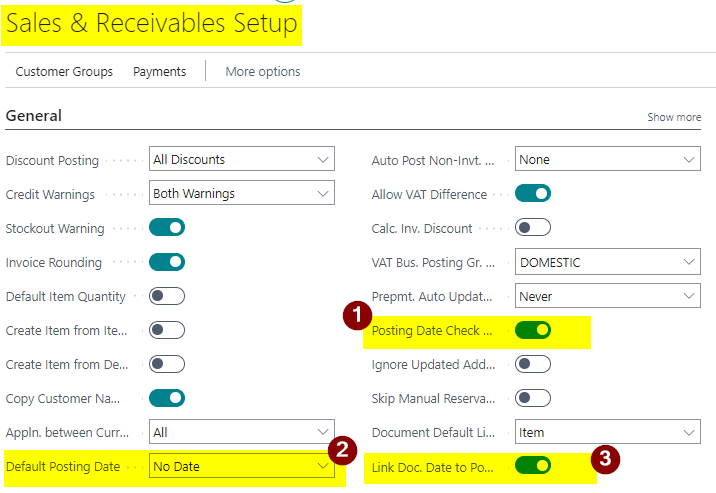
Lets go through each one in turn:
Option 1: Posting Date Check on Posting
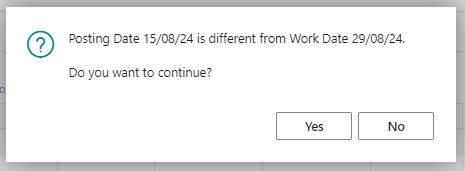
With this option selected the user will be warned when posting the Sales Order if your Work Date differs from the Posting Date. For example, I’d receive the message below if I’d have tried to post a Sales Order with a date of the 15th of August while having a work date of the 29th of August
Option 2: Default Posting Date
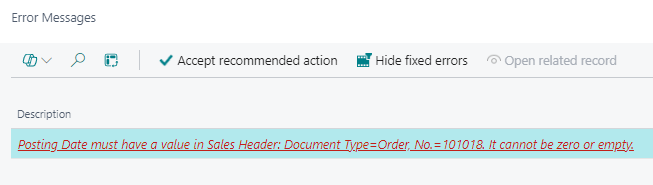
With this option selected the Posting Date is left blank meaning it must be populated prior to posting. If you try and post without a posting date you are presented with the following error:
Forcing the user to enter the correct date should help reduce errors
Option 3: Link Doc Date to Posting Date
I’ve included this one because it can be used in conjunction with the second option. For example, when this option is selected and you change the Posting Date on the Sales Order, the Document Date automatically changes as well.
This is demonstrated below where the Document Date is automatically updated when I populate the blank Posting Date
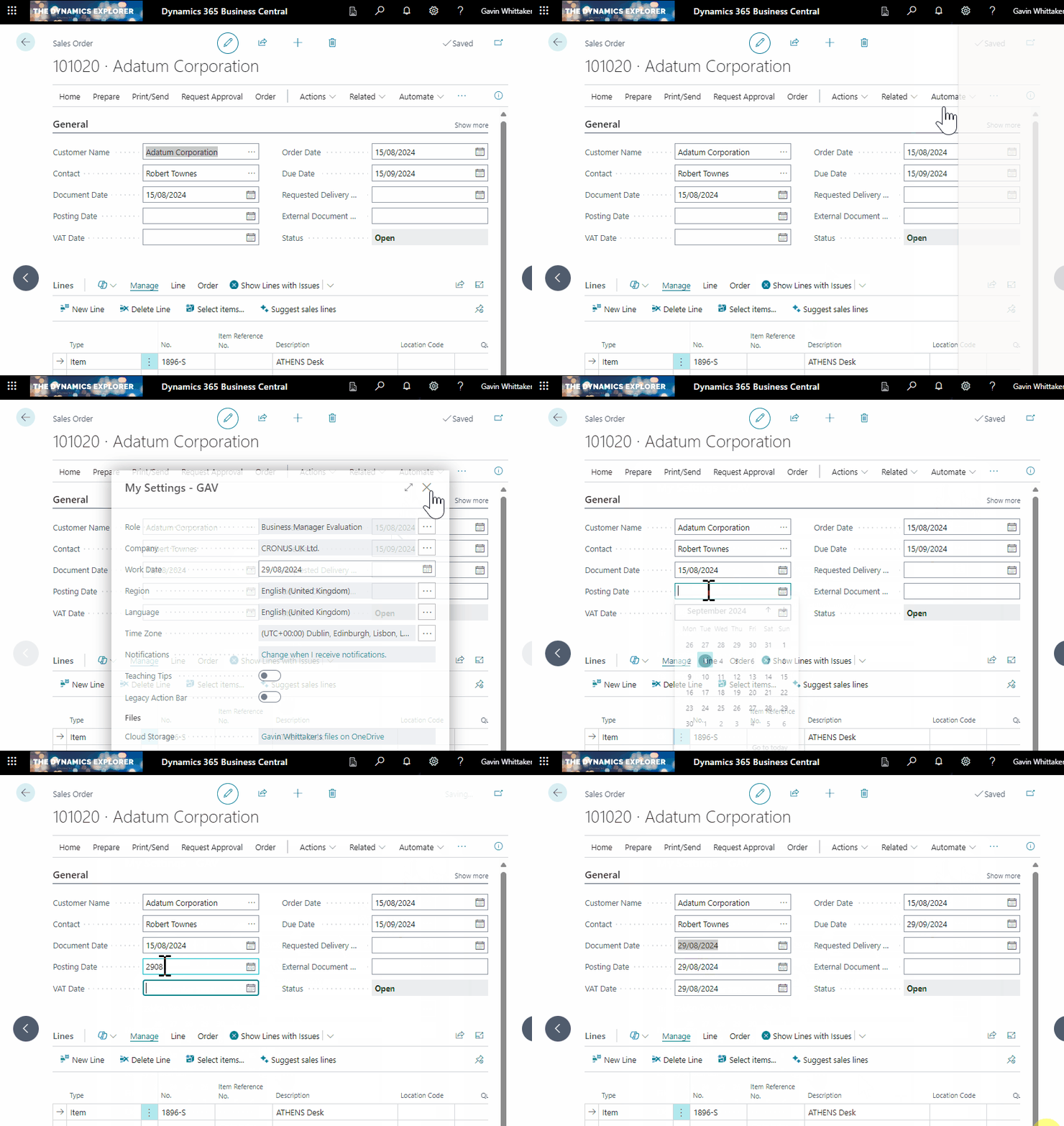
This means that by being forced to change the Posting Date, because its blank, I’m automatically changing the Document Date 😊.
Some Invoicing Alternatives
Another option might be to Invoice using the “Sales Invoice” page rather than from the Sales Order.
When using the Sales Invoice page, the invoice is created based on your Work Date, reducing the likelihood of errors with the Document Date and Posting Date. This method also offers additional functionality, such as the ability to consolidate multiple Sales Orders (or more accurately, Shipments) into a single Sales Invoice.
You can also use the “Combine Shipments” feature which gives the option of entering a Posting Date which is defaulted from the Work Date.
Both of these options require you to have posted the Sales Shipment as the “Sales Invoice” using the “Get Shipment Lines” feature to invoice Sales Orders and the Combine Shipments also looks at Shipment Lines from Sales Orders.
Conclusion
This post goes through how important the Document Date and Posting Date are on a Sales Order and how to avoid pitfalls of posting with them set incorrectly.
It outlines a couple of standard features you can use to prevent those errors and also how other features such as invoicing from a Sales Invoice rather than the Sales Order might be more useful in some cases.
Thanks for reading!

 thedynamicsexplorer.com