Introduction
Recently I’ve been looking into how the “Unit Cost” is calculated for items using the “FIFO” costing method. I’ve found even if the item is set to “FIFO” the Unit Cost still displays an “Average Cost”. What’s more, depending on your “Inventory Setup”, this “Average Cost” might not be an as it seems either.
The answer lies in the role of the “Automatic Cost Adjustment” setting in “Inventory Setup”. (and therefore the “Adjust Costs – Item Entries” batch job)
In this post I’ll walk through a series of postings and check back on the “Unit Cost” while also checking the “Value Entries” to see what costs are being posted to the GL.
Here goes 🙂
Unit Cost when “Automatic Cost Adjustment” set to ALWAYS
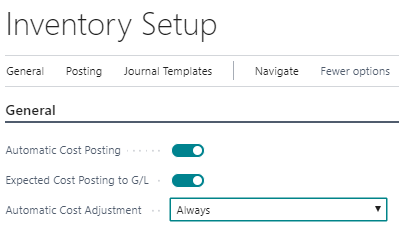
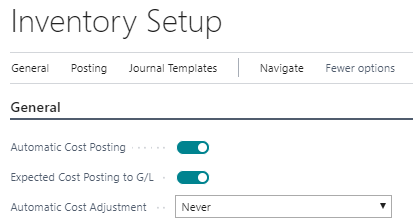
In the first test I set the option “Automatic Cost Adjustment” to ALWAYS in my Inventory Setup as per below:
I then created a brand new item with a costing method of FIFO and gave it an initial “Unit Cost” of £10.00
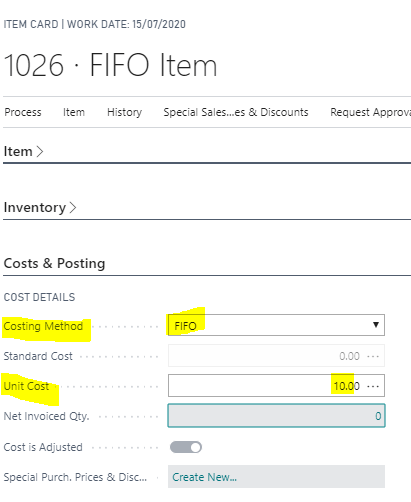
With this configuration I then received and invoiced the following quantities and values:
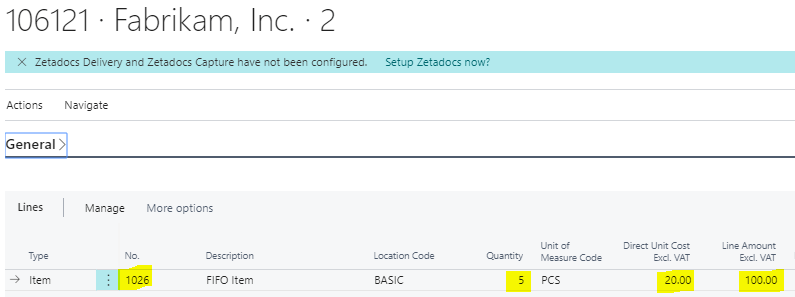
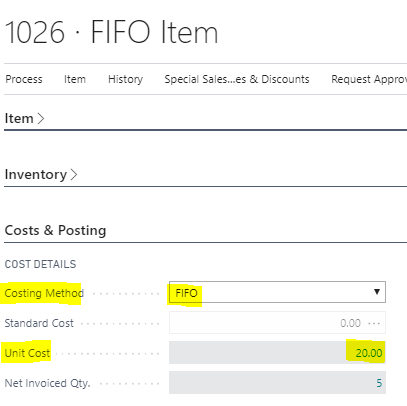
A Purchase Order with a Quantity of 5 and a unit cost of £20.00
This changes my original “Unit Cost” to £20.00.
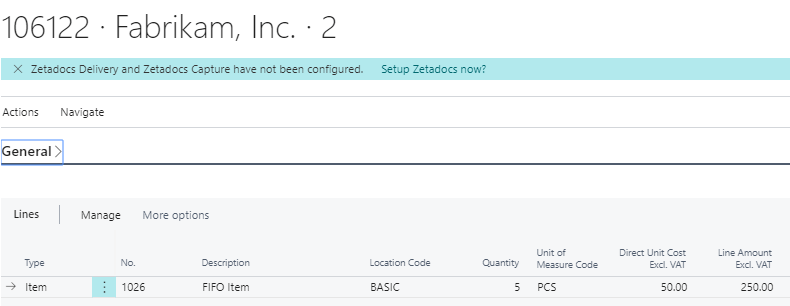
A Purchase Order with a Quantity of 5 with a unit cost of £50.00
Now when I check the Unit Cost on the Item page its showing as £35.00.
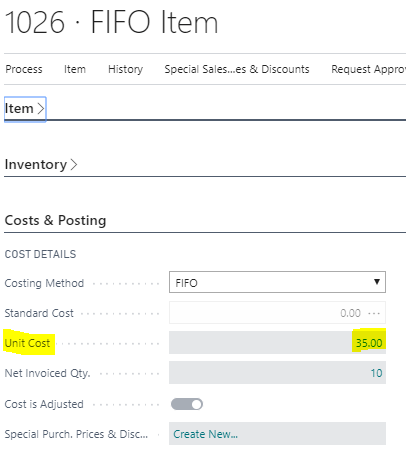
So why is this, and what cost will be posted when I sell the item?
If you drill back on the “Unit Cost” the answer becomes apparent via the “Average Cost Calc. Overview” page:
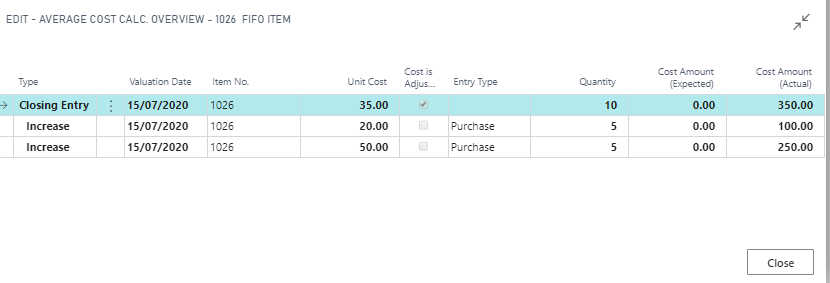
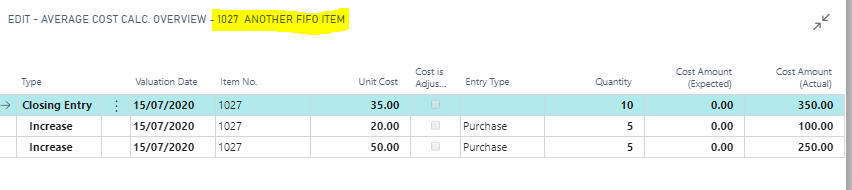
This is showing that we have a quantity of 10 in inventory at a total value of £350.00 giving an average cost, and therefore a Unit Cost, of £35.00.
Selling an item
Things get really interesting when I now sell an item.
According to FIFO rules, when we sell an item, the system should post the actual cost from the first receipt (i.e. first in, first out). This cost isn’t £35.00, as is shown in the Unit Cost, it should be £20.00.
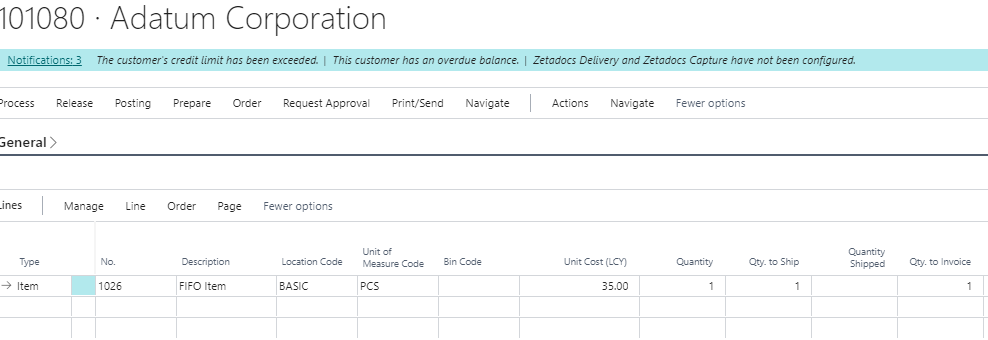
To see what happens I’ll ship and invoice a Sales Order for a Quantity of 1 as per below. (as you can see the Unit Cost displayed is £35.00)
Firstly, let’s check the “Unit Cost” on the item.
After posting the sales order if I now check the “Unit Cost” on the item you can see this has *automatically* (more on this later) been recalculated as per below:
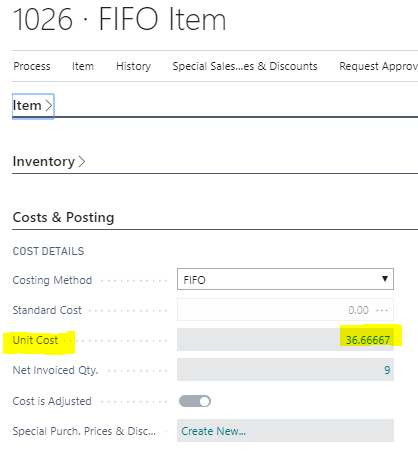
Its now showing £36.66667 because we have a total of 9 in inventory at a total cost of £330.00 giving us an “Average Cost” of £36.66667 i.e. 330/9=36.66667.
So, what cost was posted to the GL for the Sales Order? Did the system post £35.00 or £20.00?
For this we’ll dig into the “Value Entries” on the item. As we can see the system posted an initial cost amount of -£35.00, as per the “Unit Cost” and then *automatically* posted an adjustment entry of £15.00 giving the correct FIFO cost of £20.00
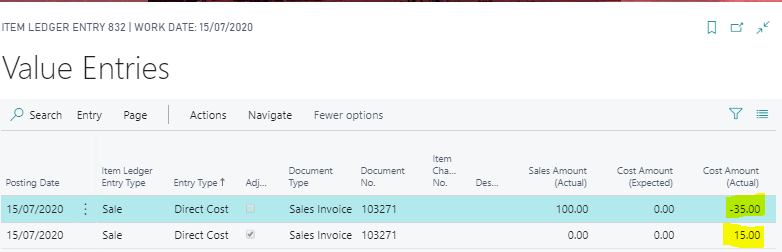
The key takeaway here is the reason we get the additional “adjustment” posting of £15.00 *automatically* is because we have the “Automatic Cost Adjustment” setting switched to ALWAYS in the Inventory Setup.
As I understand it having this switched to ALWAYS runs the “Adjust Costs – Item Entries” batch job every time you post a transaction therefore posting the correct FIFO cost *automatically*.
Unit Cost when “Automatic Cost Adjustment” set to NEVER
Now, let’s test what happens to the “Unit Cost” and the FIFO costs when we have the “Automatic Cost Adjustment” set to NEVER.
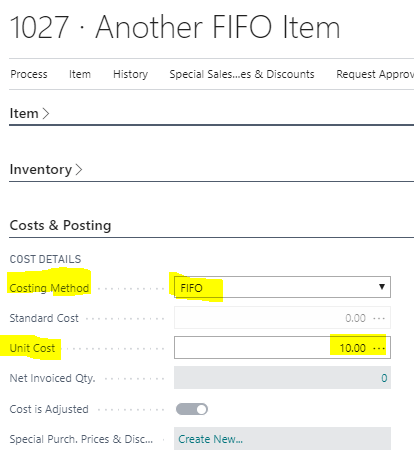
First, I’ll create a new item as per below using the same initial “Unit Cost” and a costing method of “FIFO” as the previous item:
I’ll raise the same Purchase Orders as before however for brevity I won’t include screen shots of the Purchase Orders on this occasion.
When we now check the “Unit Cost” the system is still showing £20.00 as per the first purchase order we received and invoiced. It hasn’t been *automatically* changed to the correct “Average Cost” of £35.00.
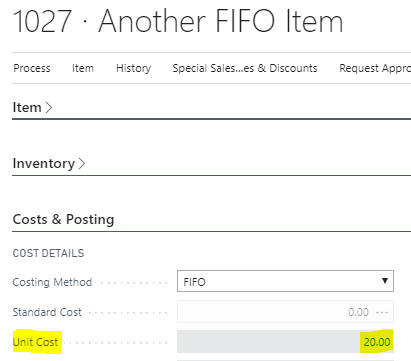
However if I check the “Average Cost Calc. Overview” by drilling back on the “Unit Cost” it shows we have a quantity of 10 at a total cost of £350.00.
So, why hasn’t the system updated the “Unit Cost” on the item on this occasion?
This is because we have switched “Automatic Cost Adjustment” to NEVER. This means the “Adjust Costs – Item Entries” batch job hasn’t ran when we posted the receipt and invoice for the Purchase Orders.
Therefore if we want to update the “Unit Cost” we must run the “Adjust Costs – Item Entries” batch job manually as per below:
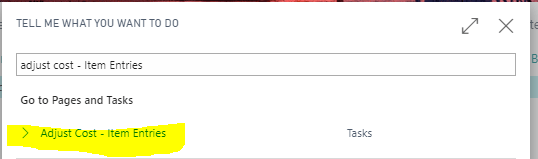
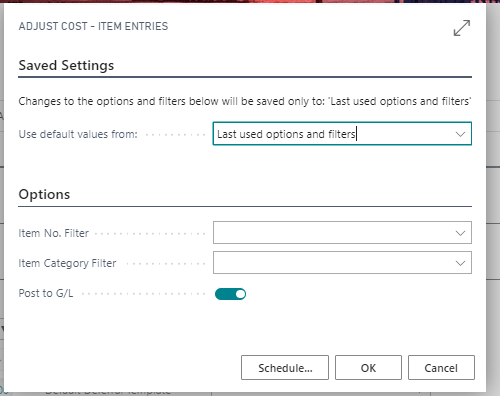
Then click OK to run this for all items. (I could add a filter for my item if I’d prefer)
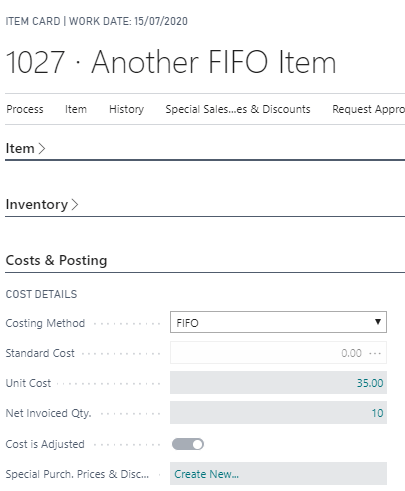
Now when I check the “Unit Cost” the correct Average Cost is now showing
Its also worth noting that if I leave the setting “Automatic Cost Adjustment” set as NEVER, when I post a shipment the “Value Entries” produced will be for the “Unit Cost” on the item i.e. now that is -£35.00 as we have ran the “Adjust Cost – Item Entries” batch job. The additional “Adjustment” Value Entry will only be produced when I next run the “Adjust Costs – Item Entries” batch job.
Conclusion
The “Automatic Cost Adjustment” setting has a direct impact on what is shown in the “Unit Cost” of an item. This determines when the “Adjust Costs – Item Entries” batch job runs which, amongst other things, also recalculates the Unit Cost on items.
Thanks for reading.