Dynamics 365 Business Central – Exploring the Different Options when running the “Close Income Statement” Routine

Introduction

In this post, we’ll explore the various options available when running the “Close Income Statement” routine in Business Central, and we’ll also look at the outcomes of running each option.

This routine is used to close the income statement General Ledger accounts and transfer the balances to the retained earnings account as part of the General Ledger year end routine.

Depending on your needs, Business Central offers several ways to customise how these accounts are closed, and in this post, we’ll walk through each of these options, showing the results when the routine is run using the different settings.

Please note this post assumes you have followed any year end processes such as ensuring all General Ledger accounts are correctly set as either Income Statement or Balance Sheet and the Financial Year has been closed via the “Accounting Periods” page.

Option 1 – Post to Retained Earnings in Summary with no Dimensions

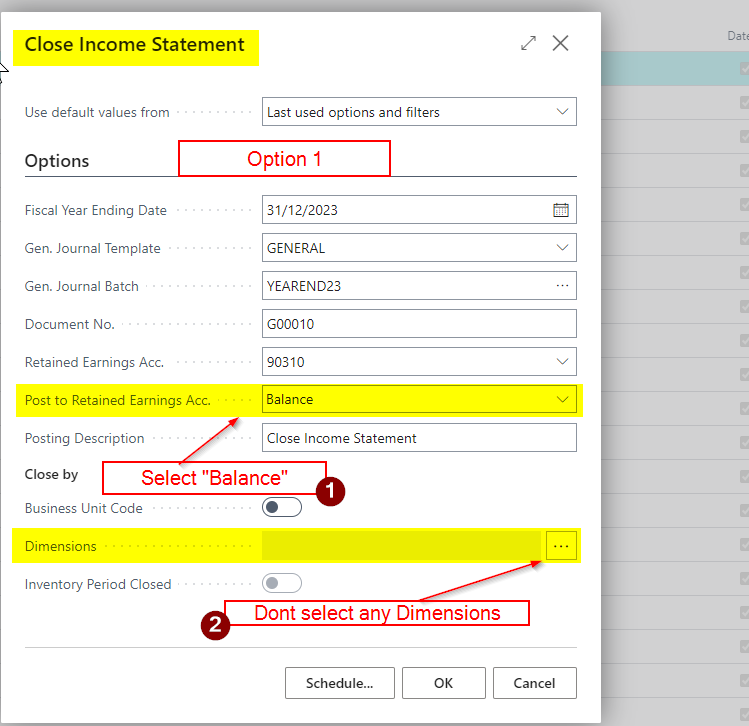
With option 1 we select the following options in the “Close Income Statement” page

  1. Post to Retained Earnings Acc. = Balance
  2. Dimensions = None Selected

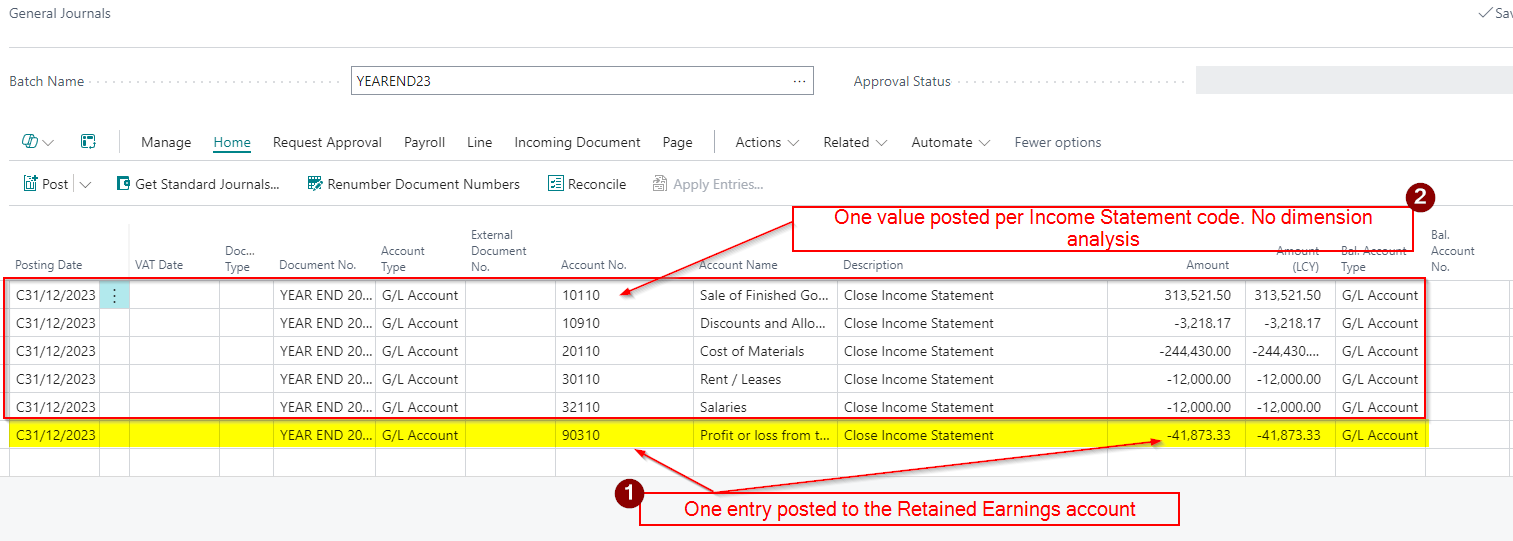
Using the options above the system closes each income statement at GL account level, without any breakdown by dimension. Therefore is I were to have multiple postings to an income statement GL account, and each posting had different dimension analysis, I’d just get one entry in my closing journal for the total balance of the income statement account, rather than a posting per dimension combination.

Additionally, as we have selected “Balance”, the system will make a single entry to the retained earnings account, consolidating all income and expense balances into one summarised posting.

The outcome of using these options in my demo data is shown below.
Option 2 – Post in Detail to the Retained Earnings but no Dimension Analysis

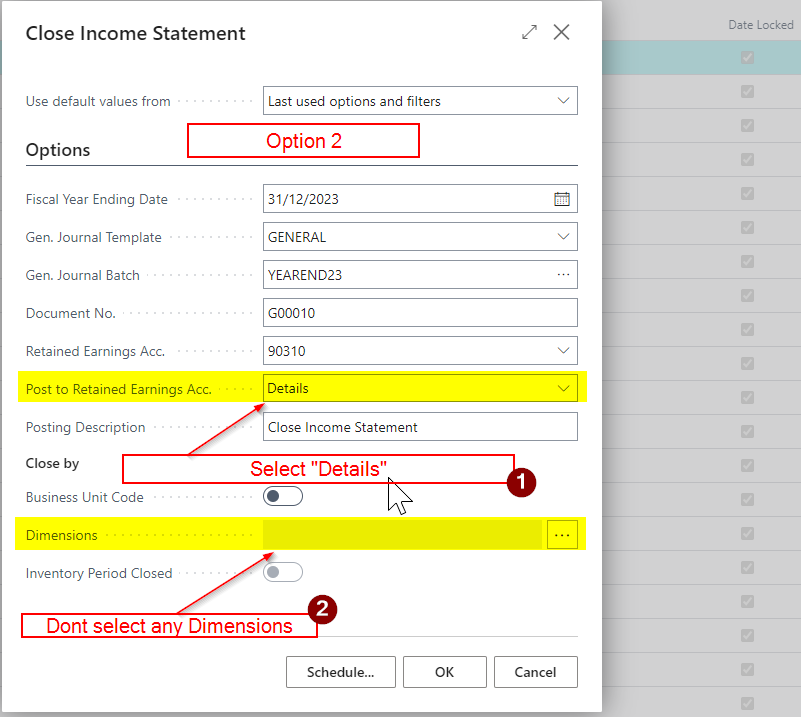
With option 2 we select the following options in the “Close Income Statement” page

  1. Post to Retained Earnings Acc. = Detail
  2. Dimensions = None Selected

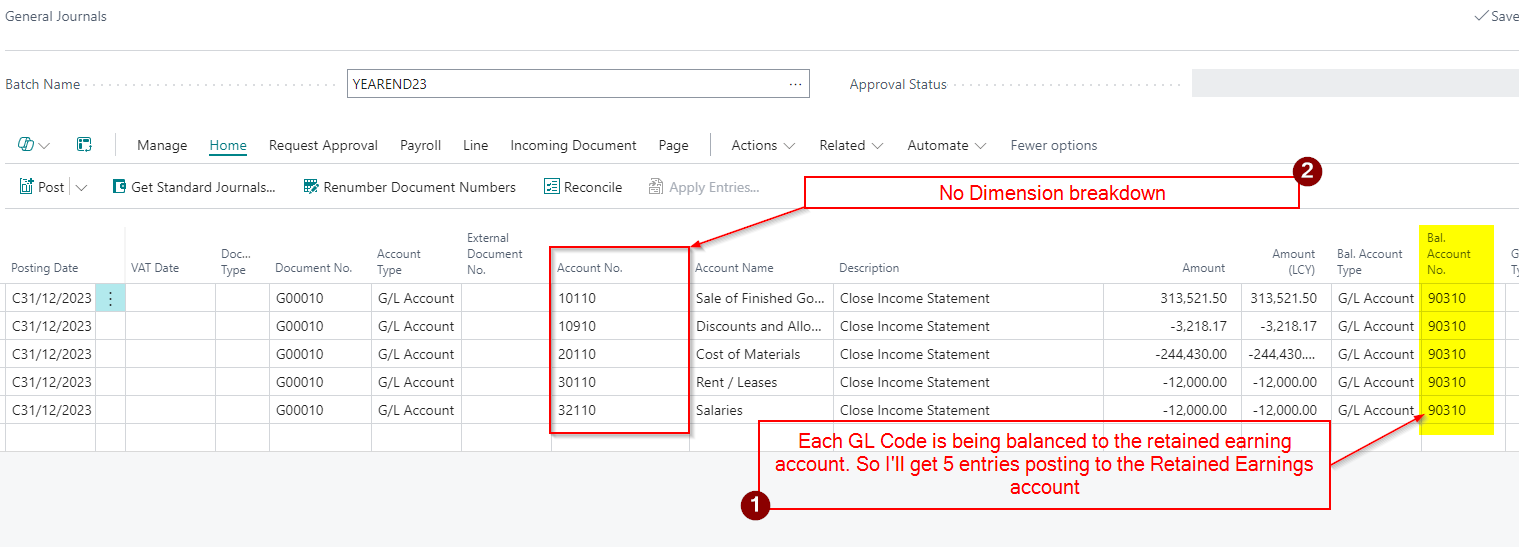
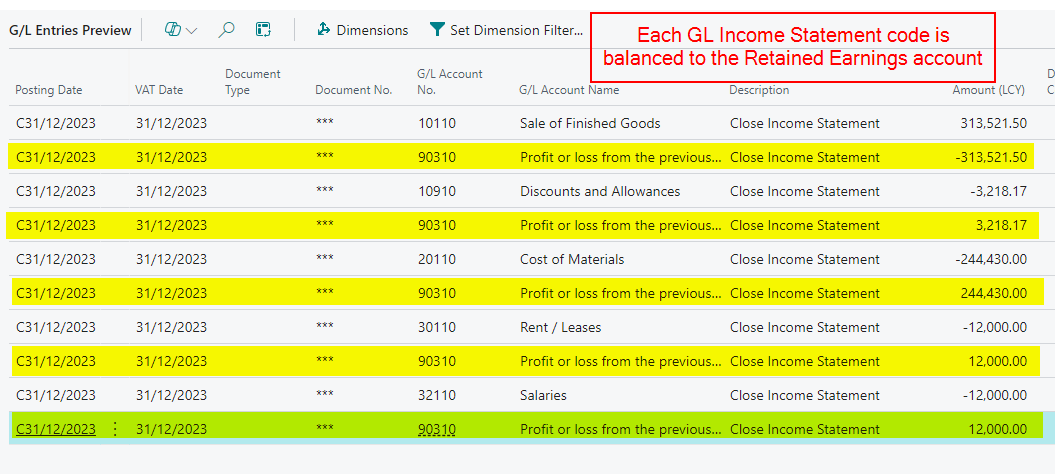
When you run the “Close Income Statement” process in Business Central and select “Detail” rather than “Balance,” the system posts an entry to the Retained Earnings account for each individual income statement GL account its closing. I’ll therefore get multiple entries (“Detail”) to the retained earnings account rather than a “Balance”.

However, as I’ve still not selected “Dimension”, I’d still only get one posting per income statement account, regardless of any dimension postings.

The outcome of using these options in my demo data is shown below.
To highlight the additional “detail” posting to the Retained Earnings account, if I preview post this journal I can see the 5 posting to the Retained Earnings account rather than one entry.
Option 3 – Post in Summary to Retained Earnings and close by Dimension

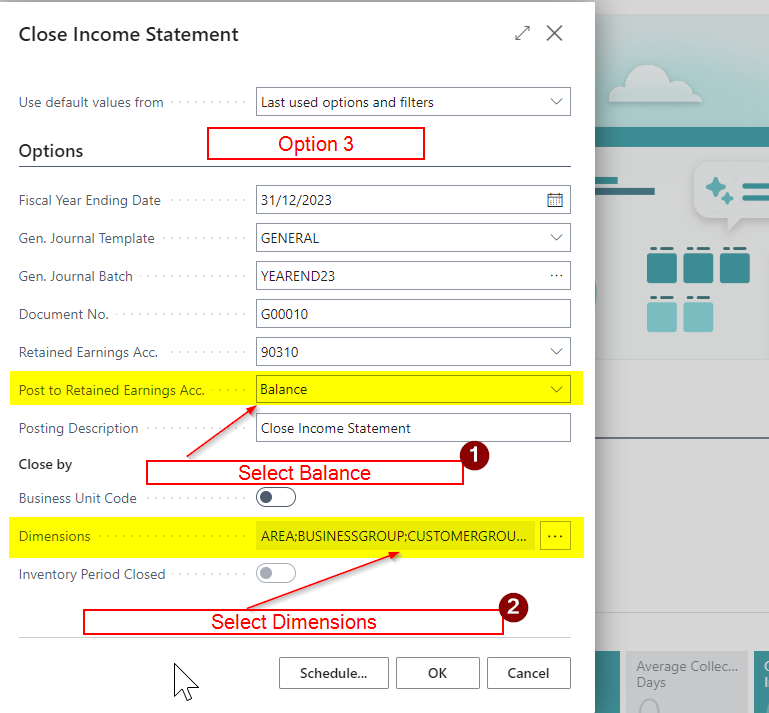
With option 3 we select the following options in the “Close Income Statement” page

  1. Post to Retained Earnings Acc. = Summary
  2. Dimensions = All Selected

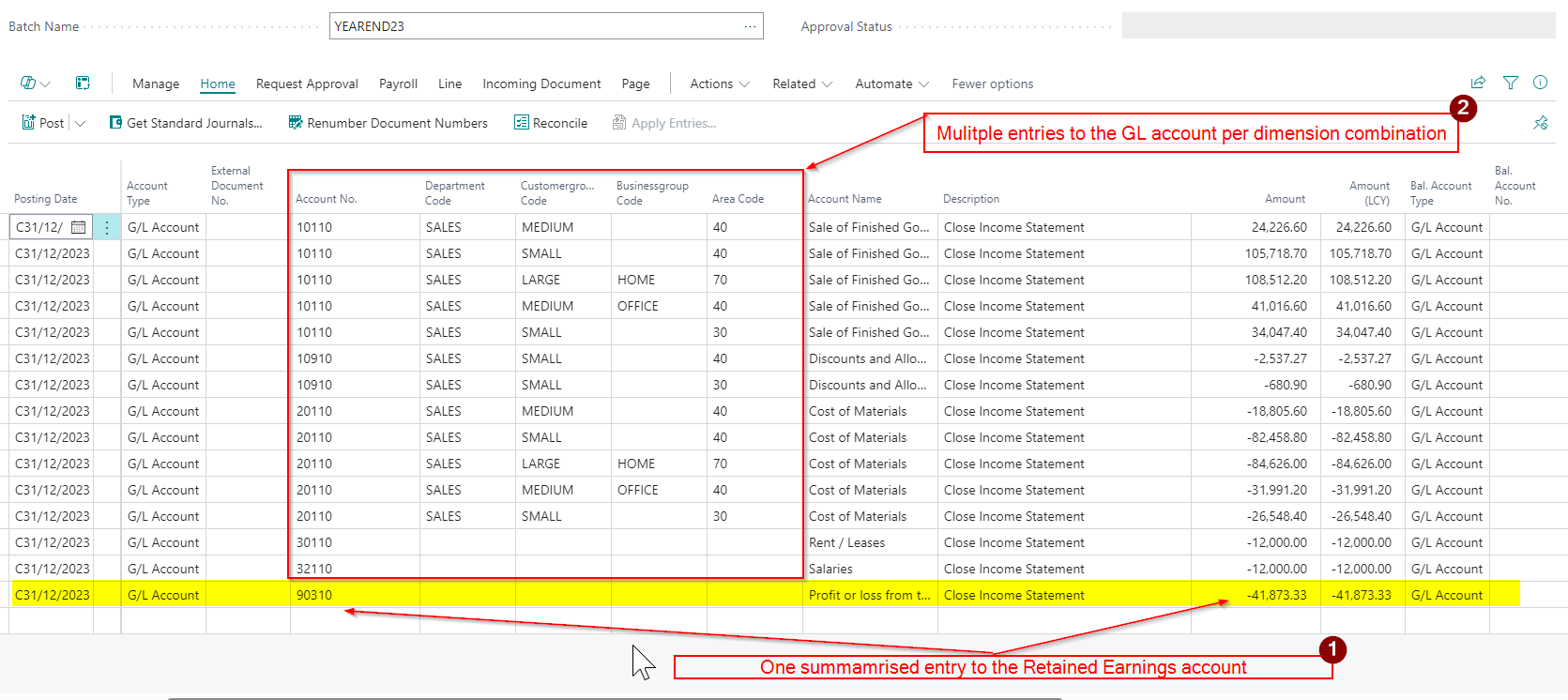
With “Balance” and dimensions enabled as per the above screen shot, we are now back to posting a summarised entry to retained earnings account, however we will now have breakdown of the GL posting by dimension for each income statement, creating separate entries per dimension.

The outcome of using these options in my demo data is shown below.

There are now multiple entries to the GL accounts per dimension combination all balanced to one entry to the Retained Earnings account
Option 4 – Post in Detail to Retained Earnings and close by Dimension

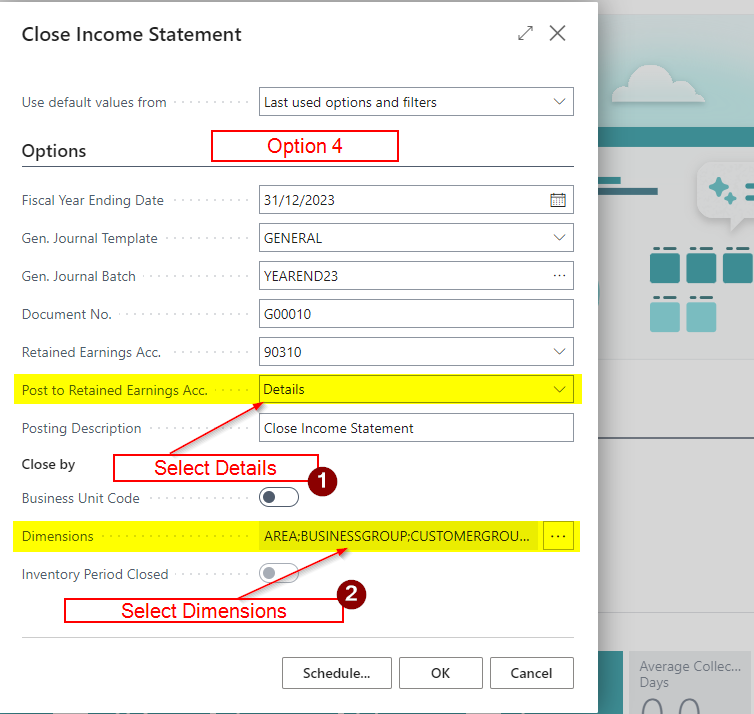
With option 4 we select the following options in the “Close Income Statement” page

  1. Post to Retained Earnings Acc. = Detail
  2. Dimensions = All Selected

The final option we’ll look at when running the “Close Income Statement” process is to select “Detail” and tick “Dimension” as per the screen show above.

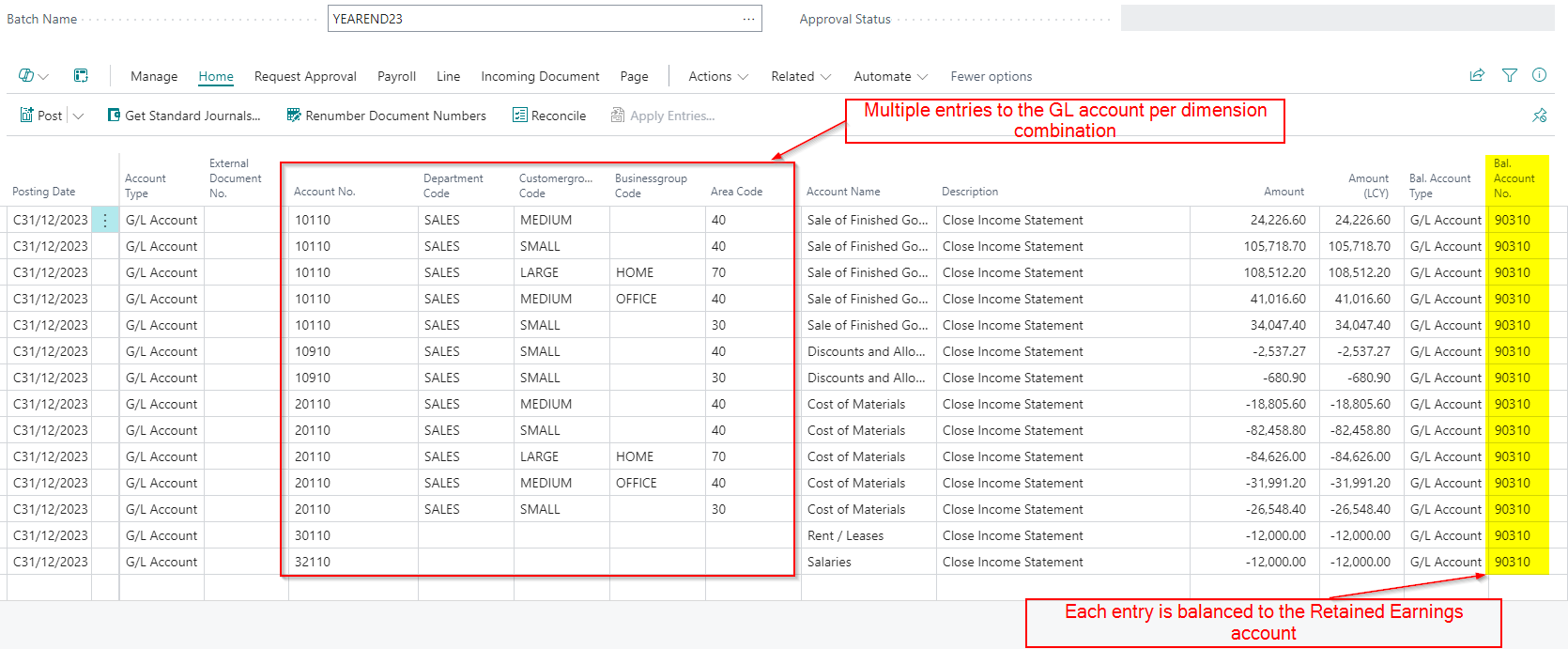
Having these options selected will post a separate entry to the retained earnings account for each income statement GL account (Detail) and further breaks down for each entry by dimension. (as we have ticked the Dimensions). This provides the highest level of detail.

The outcome of using these options in my demo data is shown below.
Conclusion

As we can see the “Close Income Statement” routine in Business Central offers several options to customise how income statement balances are posted to retained earnings.

Whether you choose to post a single summarised entry to the Retained Earnings account, or want more detailed posting, each method allows for different levels of analysis and reporting.

Thanks for reading!
Dynamics 365 Business Central – A Method for posting VAT Opening Balances when going LIVE mid VAT Period

Introduction

In previous posts I’ve looked at how I post opening balances for various modules in Business Central. Links to these articles can be found below:

How I post opening balances for the General Ledger in Business Central

Today I wanted to discuss how I post opening balances for the VAT Statement when going live Mid VAT period.

Challenges Going LIVE mid VAT Period

If you are going LIVE with Business Central mid-VAT period, some of your VAT transactions will remain in your existing system. As a result, you won’t be able to submit your VAT return through Business Central, as it won’t include all the relevant entries. You could choose to use bridging software for submission, but you also have the option to post an opening VAT position via a journal entry.

This post will walk you through the steps to use a General Journal to record the VAT entries from your previous system enabling you to post your VAT statement from Business Central.

VAT Journal Example

To post the opening position, you’ll first need to gather the VAT figures for each box on the VAT statement from your existing system.

In this example, we’ll assume the following values have been collected from the existing system and are required for the various boxes on the VAT Statement:

VAT Box NumberAmount
Box 1 – VAT due on Sales£10,000.00
Box 4 – VAT to reclaim on Purchases£7,000.00
Box 6 – Total Value of VAT on Sales£100,000.00
Box 7 – Total Value of VAT on Purchases£70,000.00

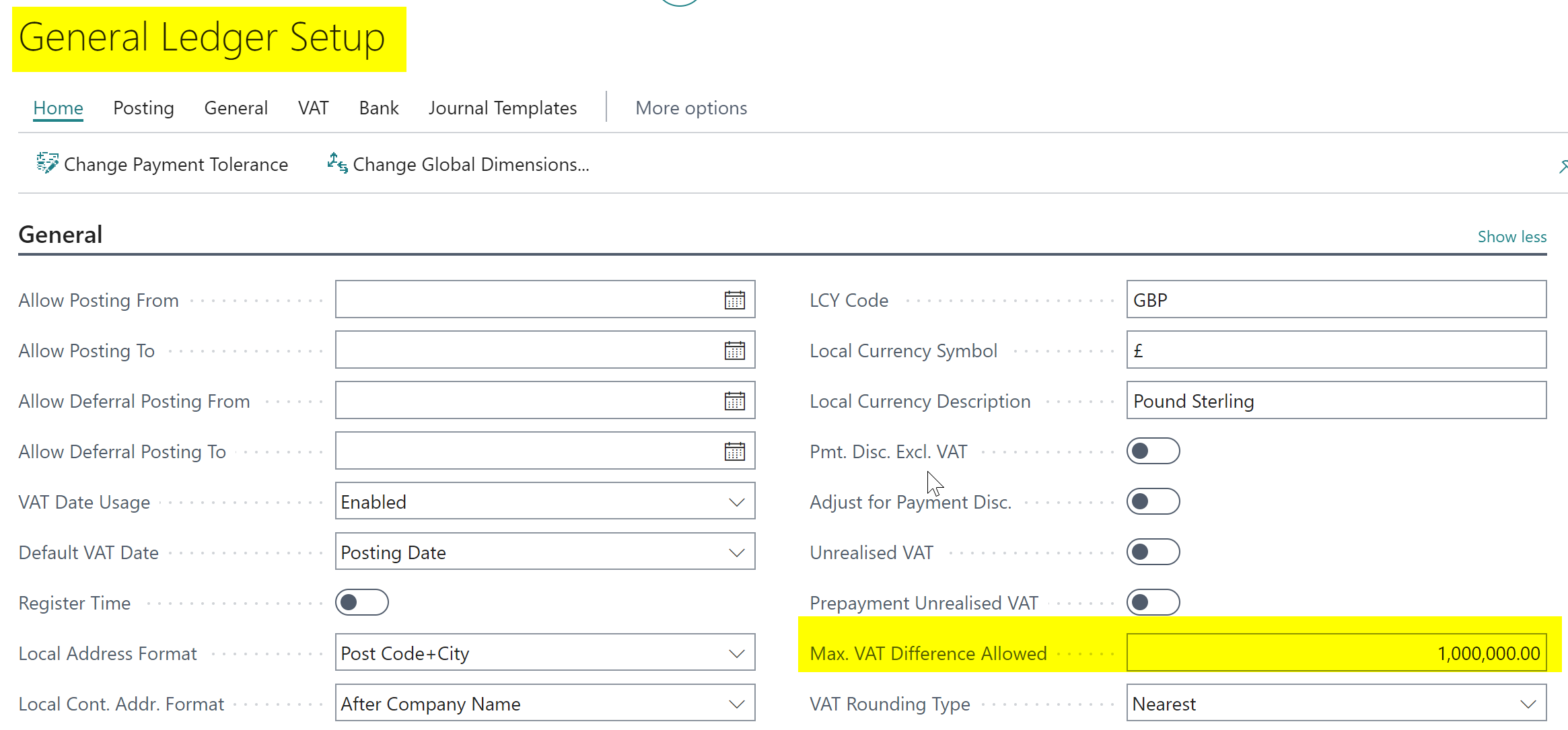
To accommodate posting the journal we need to ensure we have a large value in the “Max VAT Difference Allowed” field in the “General Ledger Setup”

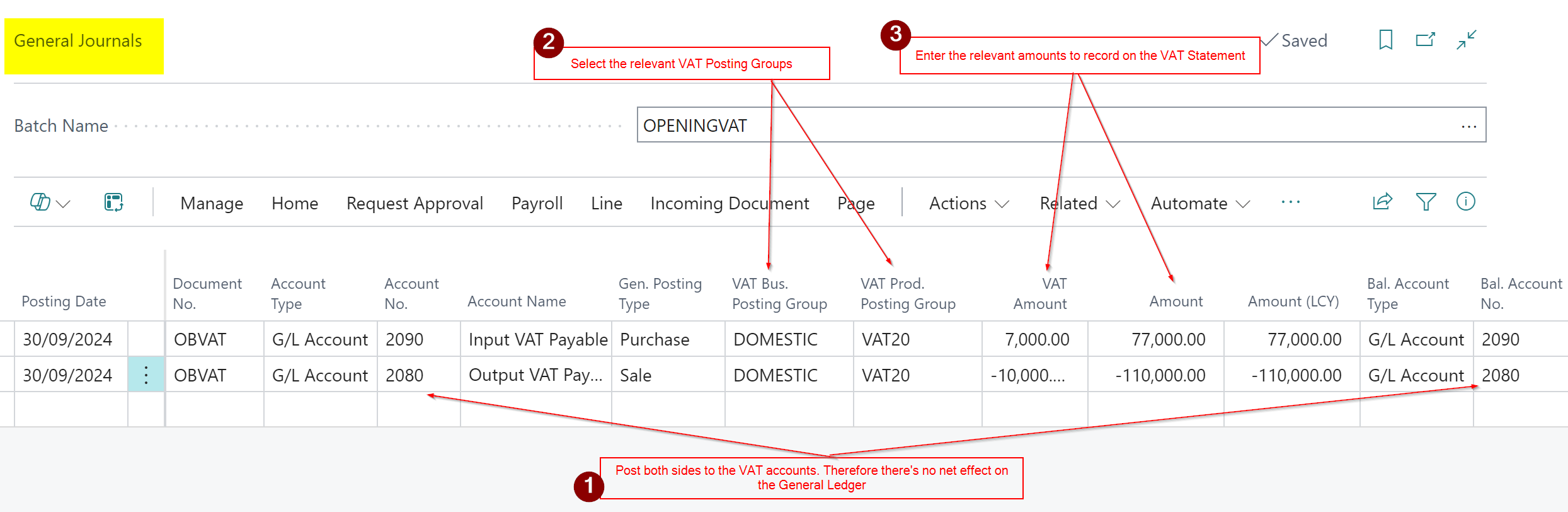
Then, to record the VAT entries we enter a General Journal as per below

Click to Enlarge

Here’s a breakdown of the General Journal:

Step 1:
Enter the VAT General Ledger codes in the “Account No.” and “Bal. Account No.” fields. This ensures the entries have no impact on the General Ledger.

Step 2:
Select the relevant VAT Posting Groups associated with the boxes on the VAT Statement.

Step 3:
Enter the VAT amounts you want reflected on the VAT Statement.

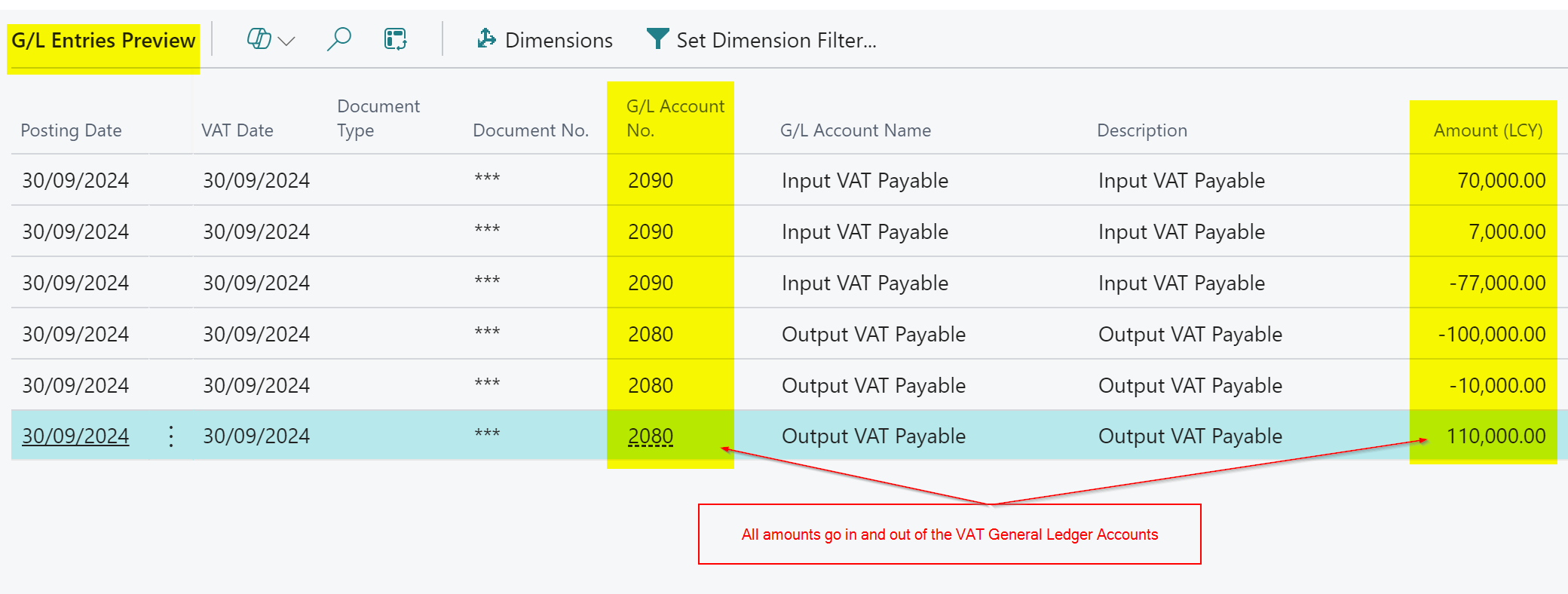
When I now preview the postings for this General Journal I can see the amounts net each other out so there’s no affect to the General Ledger.

However this journal has created the following VAT entries which can be reported on the VAT Statement.

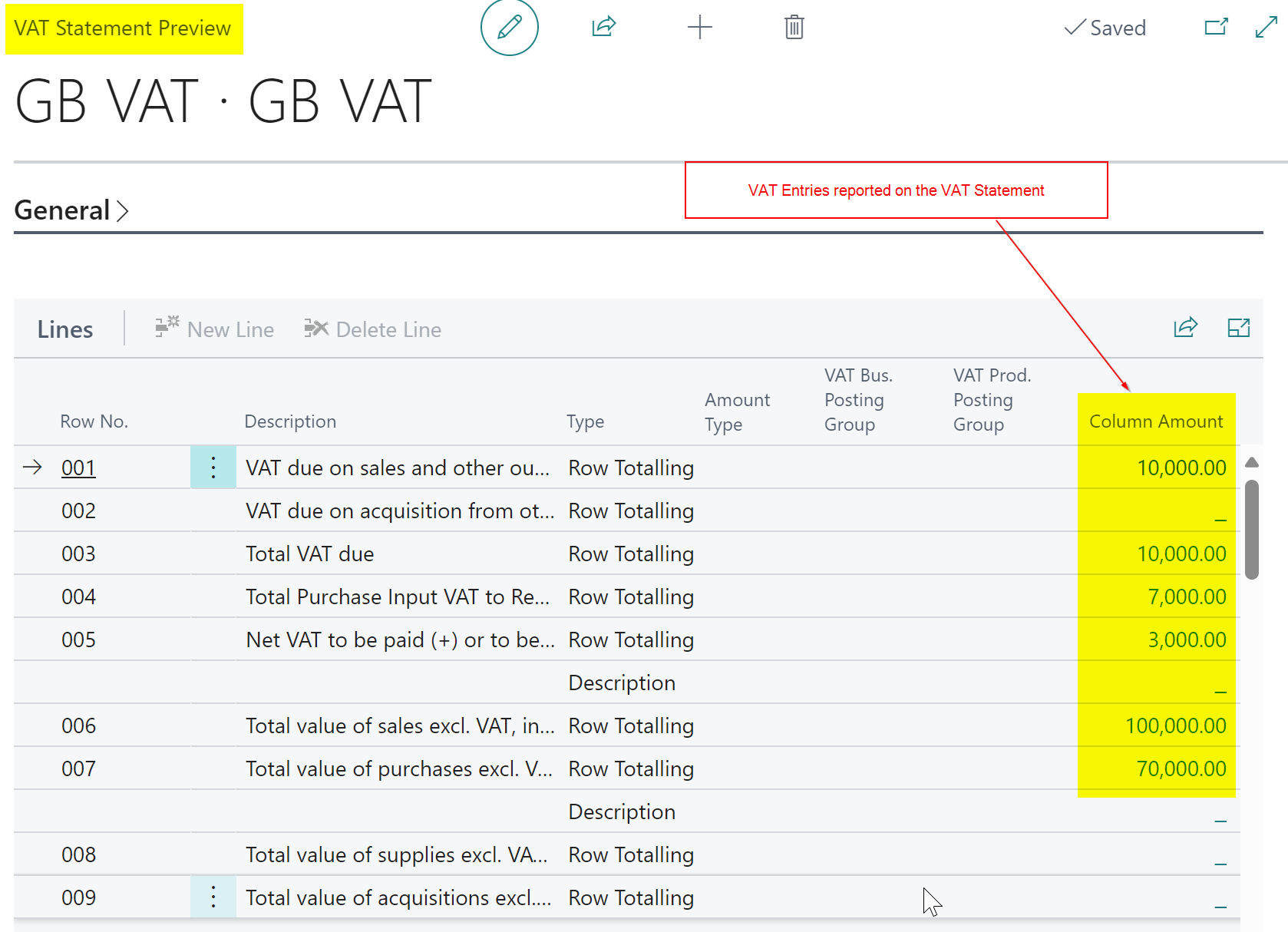
I’ll therefore post this and view the VAT Statement and I can see the amounts are being picked up correctly.

Conclusion

In the past, bridging software was commonly used when going live with Business Central mid-VAT reporting period. However, this post explains how to post a journal to record VAT entries when moving to Business Central midway through a VAT period.

Thanks for reading!

Want further help with Business Central?

If you’d like more help with Business Central, I also run Rapid365, which provides Business Central implementation and support services for UK businesses, supporting you through setup and go-live.

👉 View services and pricing at Rapid365.co.uk/pricing

Dynamics GP to Dynamics 365 Business Central – How to post a batch of Sales or Purchase Invoices using the same Posting Date

Introduction

During a recent training session with a client transitioning from Dynamics GP, a question came up regarding batch posting.

In Dynamics GP, it’s possible to use the batch’s “Posting Date” as the posting date for all transactions within the batch. The client wanted to know if this same functionality is available in Business Central.

In this post, I’ll walk you through how to achieve this in Business Central.

Dynamics GP Batch Setting

The setting the client is referring to is configured in the “Posting Setup” window in Dynamics GP as shown below:

Here, you can configure, on a ledger and per-transaction type (origin) basis, whether the system should use the posting date from the individual transaction or the batch when posting transactions.

Business Central “Post Batch” Feature

In Business Central, when posting multiple Sales or Purchase Invoices, you can control which date the system uses as the “Posting Date” through the following option.

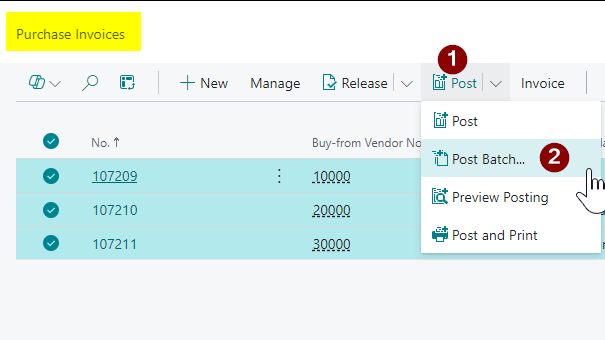
See below, I can select multiple Purchase Invoices and select “Post > Post Batch”

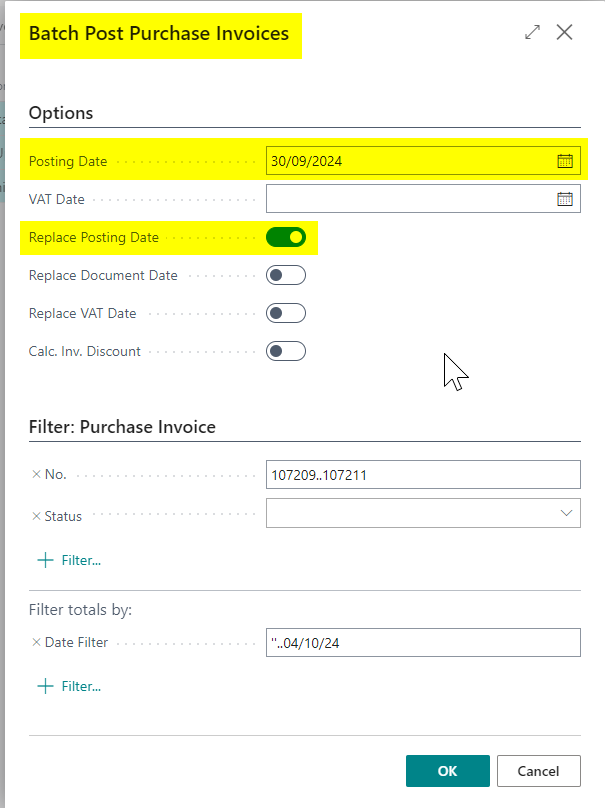
And then enter the Posting Date you wish the system to use for each of your Purchase Invoices:

Let’s walkthrough an example with Purchase Invoices

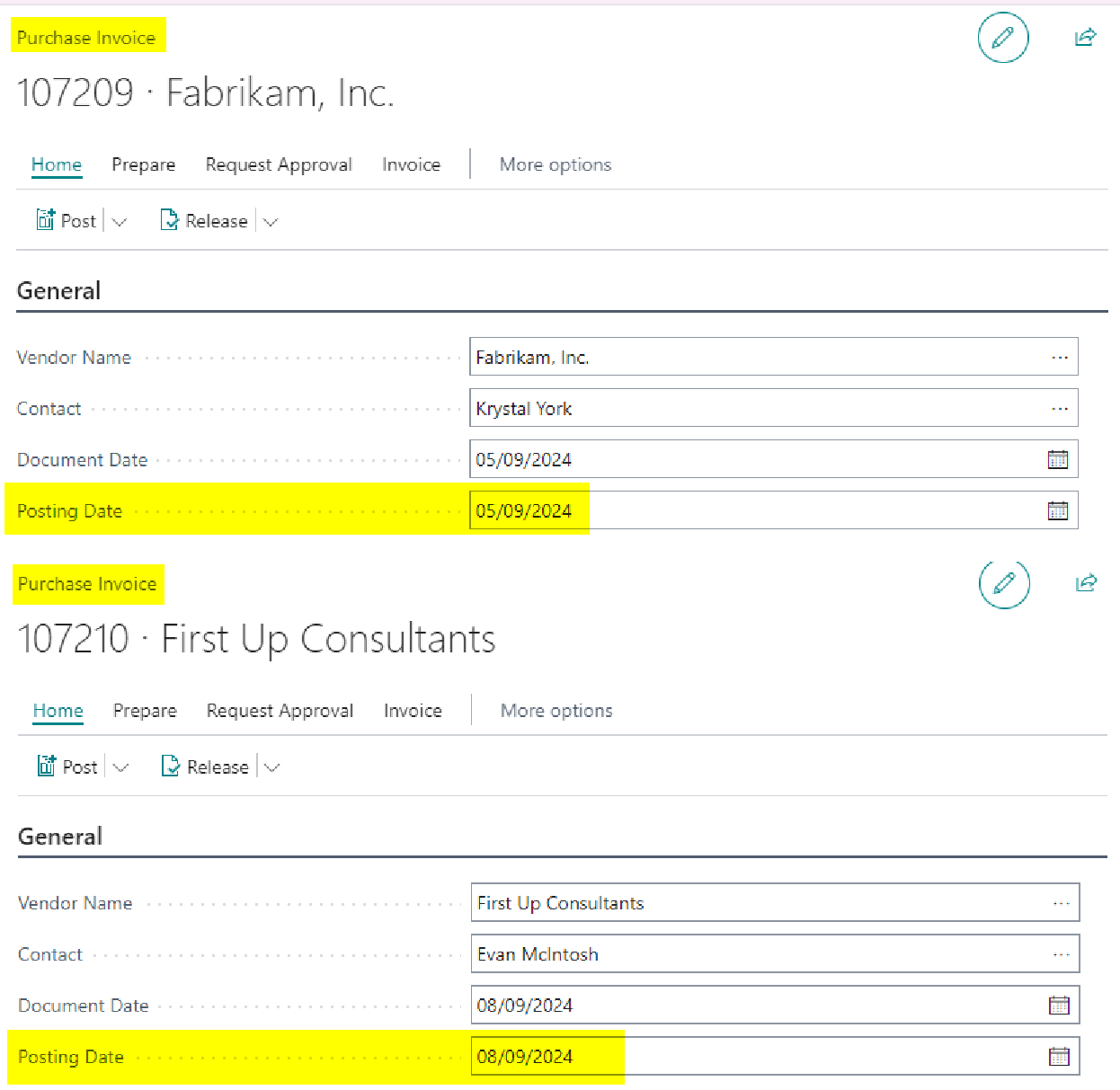
Let’s say you have the two Purchase Invoices shown below, each with a different posting date in September, but you want both to be posted using a Posting Date of September 30, 2024:

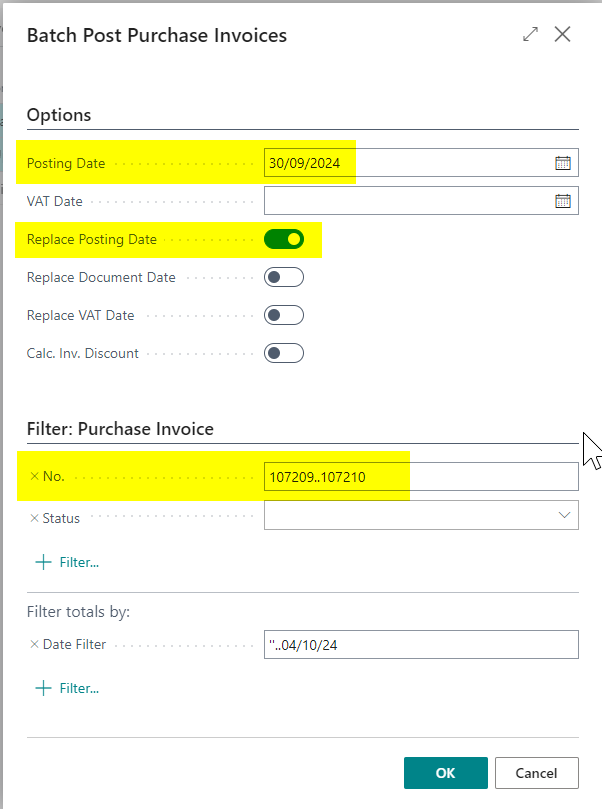
First, you select both Purchase Invoices in the Purchase Invoice list page, choose “Post > Post Batch,” and choose to replace the Posting Date as shown below.

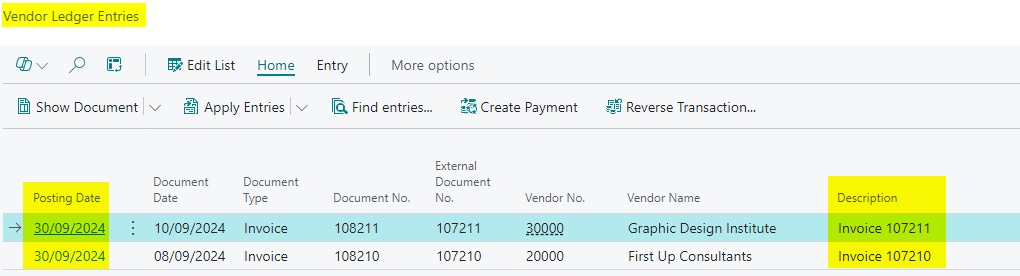
Now when I view the Purchase Invoices I can see both invoices have a Posting Date of 30/09/2024

Conclusion

This post shows how you can batch post Sales or Purchase Invoices using a single Posting Date, replicating the functionality available in Dynamics GP.

Thanks for reading!